
“The Most High is the Defender and Protector of all such as with a pure conscience venerate His all-excellent name; to whom be glory for ever and ever.”
INTRODUCTION
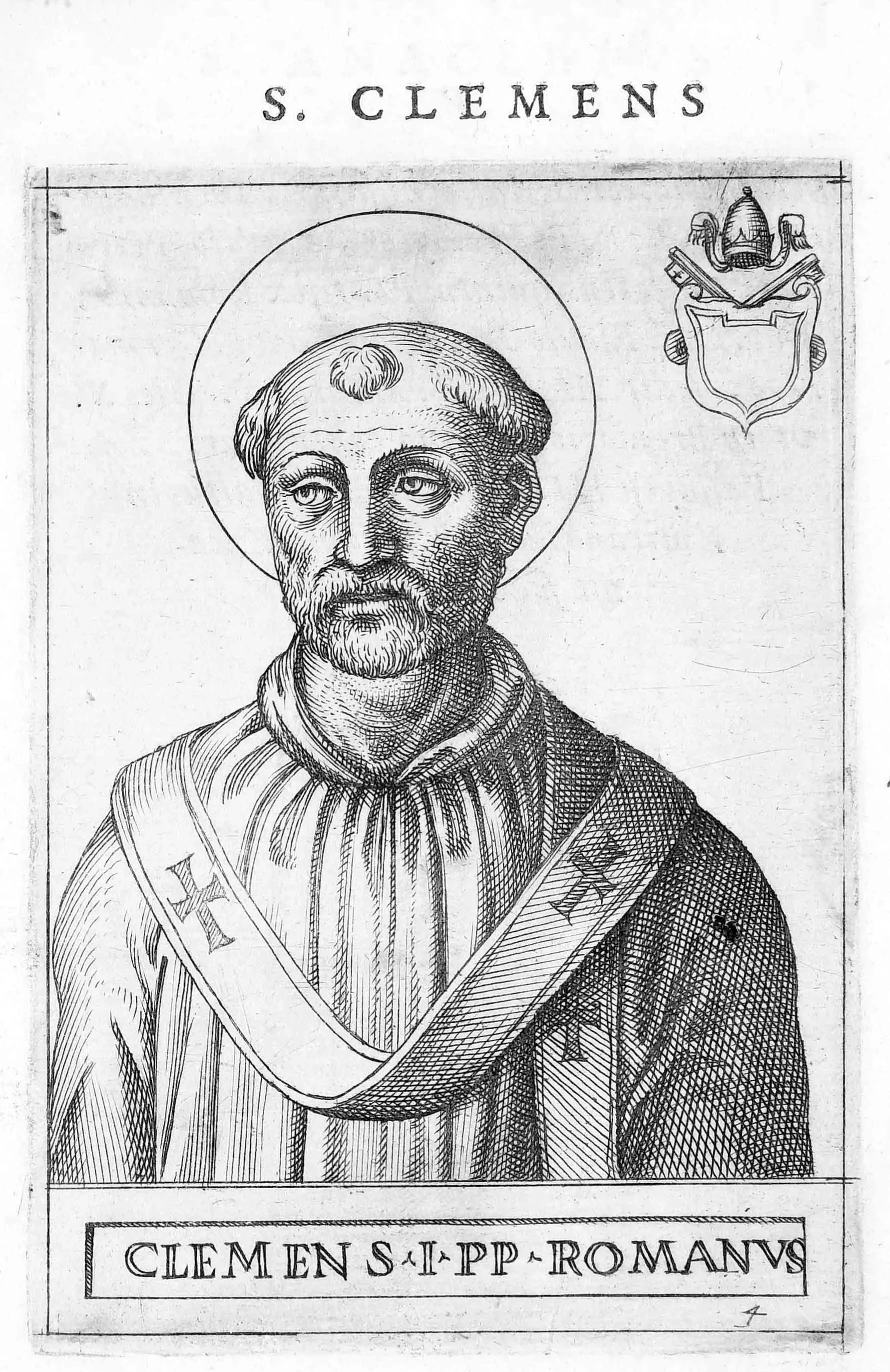
St. Clement of Rome, according to tradition, was the fourth Bishop of Rome. There is a possibility that he was also the Clement mentioned in Philippians 4:3 where St. Paul mentions him as a “fellow worker” in the Gospel whose name is written in the book of life. A document traditionally attributed to his pen was 1st Clement. There is also a 2nd Clement, but that document’s link to Clement is generally seen as more tenuous than the first. Regardless of authorship, 1st Clement is generally accepted to have been written somewhere between the late 1st and early 2nd centuries, making it among the oldest Christian writings not found in the New Testament.
1st Clement was an epistle to the Corinthians, who had overthrown their duly-appointed presbyters (pastors) and put up new ones. It would appear that even after St. Paul wrote two letters to them, the Corinthians still were making trouble. While not Scripture, 1st Clement is an important document for understanding how Christians in the immediate post-Apostolic period saw themselves and their calling.
NOTE: This rendering of the text is taken from New Advent. To read more, scan the QR code.
AN EXCERPT FROM FIRST CLEMENT
The apostles have preached the gospel to us from the Lord Jesus Christ; Jesus Christ has done so from God. Christ therefore was sent forth by God, and the apostles by Christ. Both these appointments, then, were made in an orderly way, according to the will of God. Having therefore received their orders, and being fully assured by the resurrection of our Lord Jesus Christ, and established in the word of God, with full assurance of the Holy Ghost, they went forth proclaiming that the kingdom of God was at hand. And thus preaching through countries and cities, they appointed the first fruits of their labours, having first proved them by the Spirit, to be bishops and deacons of those who should afterwards believe. Nor was this any new thing, since indeed many ages before it was written concerning bishops and deacons. For thus says the Scripture in a certain place, I will appoint their bishops in righteousness, and their deacons in faith.
And what wonder is it if those in Christ who were entrusted with such a duty by God, appointed those ministers before mentioned, when the blessed Moses also, a faithful servant in all his house, noted down in the sacred books all the injunctions which were given him, and when the other prophets also followed him, bearing witness with one consent to the ordinances which he had appointed? For, when rivalry arose concerning the priesthood, and the tribes were contending among themselves as to which of them should be adorned with that glorious title, he commanded the twelve princes of the tribes to bring him their rods, each one being inscribed with the name of the tribe. And he took them and bound them together, and sealed them with the rings of the princes of the tribes, and laid them up in the tabernacle of witness on the table of God. And having shut the doors of the tabernacle, he sealed the keys, as he had done the rods, and said to them, Men and brethren, the tribe whose rod shall blossom has God chosen to fulfil the office of the priesthood, and to minister unto Him. And when the morning had come, he assembled all Israel, six hundred thousand men, and showed the seals to the princes of the tribes, and opened the tabernacle of witness, and brought forth the rods. And the rod of Aaron was found not only to have blossomed, but to bear fruit upon it. What think ye, beloved? Did not Moses know beforehand that this would happen? Undoubtedly he knew; but he acted thus, that there might be no sedition in Israel, and that the name of the true and only God might be glorified; to whom be glory for ever and ever. Amen.
Our apostles also knew, through our Lord Jesus Christ, that there would be strife on account of the office of the episcopate. For this reason, therefore, inasmuch as they had obtained a perfect fore-knowledge of this, they appointed those ministers already mentioned, and afterwards gave instructions, that when these should fall asleep, other approved men should succeed them in their ministry. We are of opinion, therefore, that those appointed by them, or afterwards by other eminent men, with the consent of the whole church, and who have blamelessly served the flock of Christ, in a humble, peaceable, and disinterested spirit, and have for a long time possessed the good opinion of all, cannot be justly dismissed from the ministry. For our sin will not be small, if we eject from the episcopate those who have blamelessly and holily fulfilled its duties. Blessed are those presbyters who, having finished their course before now, have obtained a fruitful and perfect departure from this world; for they have no fear lest any one deprive them of the place now appointed them. But we see that you have removed some men of excellent behaviour from the ministry, which they fulfilled blamelessly and with honour.
You are fond of contention, brethren, and full of zeal about things which do not pertain to salvation. Look carefully into the Scriptures, which are the true utterances of the Holy Spirit. Observe that nothing of an unjust or counterfeit character is written in them. There you will not find that the righteous were cast off by men who themselves were holy. The righteous were indeed persecuted, but only by the wicked. They were cast into prison, but only by the unholy; they were stoned, but only by transgressors; they were slain, but only by the accursed, and such as had conceived an unrighteous envy against them. Exposed to such sufferings, they endured them gloriously. For what shall we say, brethren? Was Daniel cast into the den of lions by such as feared God? Were Ananias, and Azarias, and Michael shut up in a furnace of fire by those who observed the great and glorious worship of the Most High? Far from us be such a thought! Who, then, were they that did such things? The hateful, and those full of all wickedness, were roused to such a pitch of fury, that they inflicted torture on those who served God with a holy and blameless purpose of heart, not knowing that the Most High is the Defender and Protector of all such as with a pure conscience venerate His all-excellent name; to whom be glory for ever and ever. Amen. But they who with confidence endured these things are now heirs of glory and honour, and have been exalted and made illustrious by God in their memorial for ever and ever. Amen.
CONCLUSION
As we can see from this letter and from the New Testament, the Church has never been a free-for-all. The Church has always had an organized and visible order that the Apostles appointed to watch over the flock of laity in their care to help us run the race. May we give thanks for Rector George, Diocesan Bishop Dan, and our two Suffragan Bishops who keep watch over us. May we always encourage, obey, and pray for our leaders, and not grieve them as the Corinthians did. But for the grace of God, go we. Amen.
Daniel Liegmann