Here, then, is the second reason why the Word dwelt among us, namely that having proved His Godhead by His works, He might offer the sacrifice on behalf of all, surrendering His own temple to death in place of all, to settle man’s account with death and free him from the primal transgression.
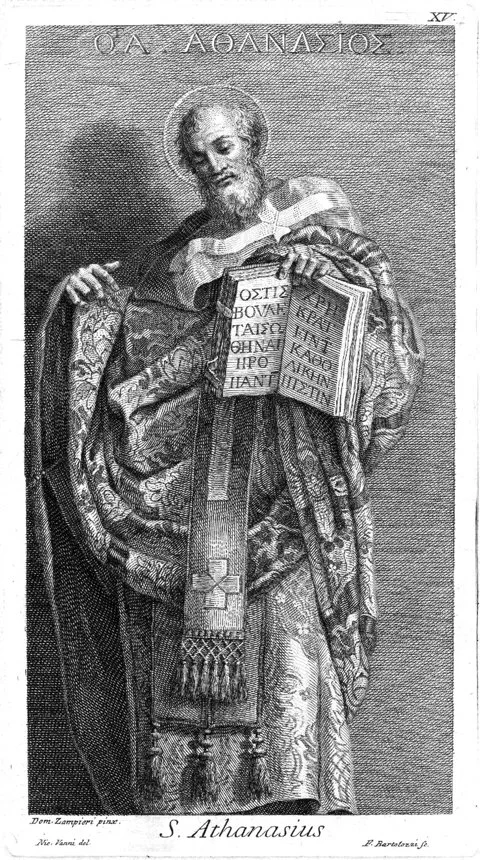
The introduction of the Nicene Creed is often presumed to be the settling of a victorious Trinitarian doctrine over Arian (the Son is created in time by the Father) and Modalist (the Son is the Father) accounts of the doctrine of God. However, the history is actually more complicated. St. Athanasius attended the Council of Nicaea as the young understudy to then-Bishop Alexander of Alexandria, whose seat he would eventually take up. However, St. Athanasius would find that his time as a major figure was to be one of deep turbulence within the Church.
The Arians didn’t go away; in fact, they grew in strength and were aided by a series of Arian-sympathetic Roman Emperors. They called councils that were bigger and grander than Nicaea to set forth their false doctrines, and they would go on to depose St. Athanasius from his bishopric. In the words of St. Jerome, “the whole world groaned and was astonished to find itself Arian”. St. Athanasius fought a seemingly losing battle as the lone outspoken defender of Nicene orthodoxy, being exiled, hunted, and arrested multiple times for defending the faith that Jesus Christ is “of one substance” with the Father, in a struggle often called “Athanasius contra mundum” (Athanasius against the world).
We all have St. Athanasius to thank that, in the providence of God, he had the courage to stand up for the Biblical doctrines summarized by the Nicene Creed against those who would posit the Son as subordinate to the Father. Another creed we recite at liturgies, the Athanasian Creed, is named in honour of him. Although scholars suggest that he himself did not write the creed, it is nonetheless a faithful reflection of his doctrine. One of his most famous works is On the Incarnation, a reflection on why the Word was made flesh in the person of Jesus Christ...
NOTE: This rendering of the text is taken from Monergism. To read more, scan the QR code.
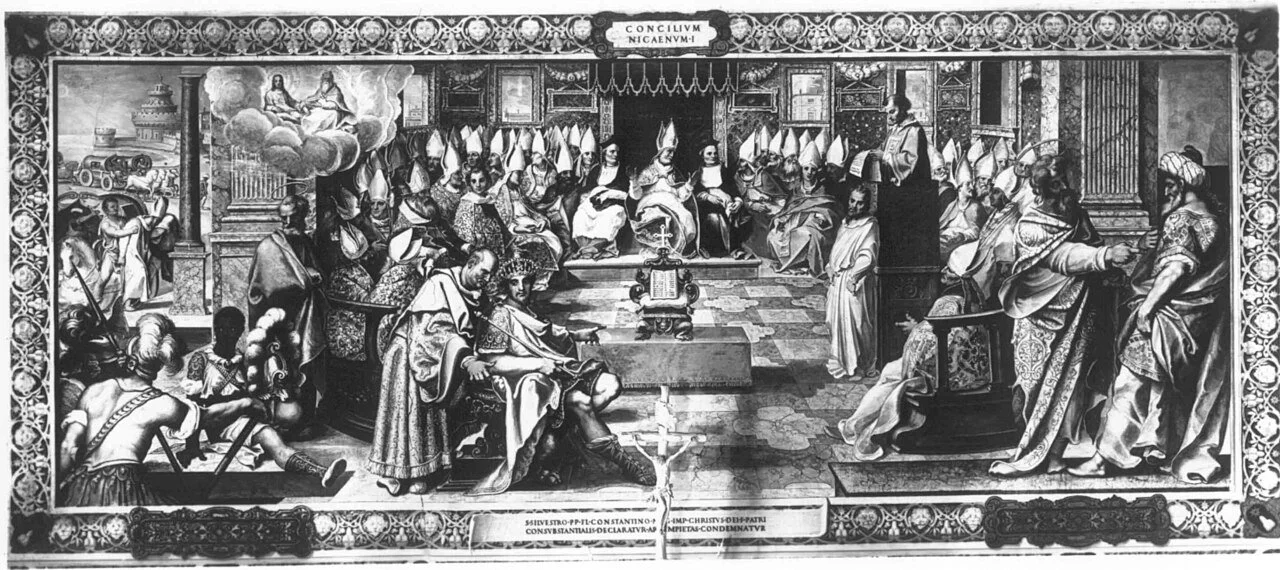
One of the frescoes of the Ecumenical Councils in the Sistine Salon at Vatican. This painting depicts the debate over what became the Nicene Creed.
AN EXCERPT FROM ON THE INCARNATION
All these things the Saviour thought fit to do, so that, recognizing His bodily acts as works of God, men who were blind to His presence in creation might regain knowledge of the Father. For, as I said before, who that saw His authority over evil spirits and their response to it could doubt that He was, indeed, the Son, the Wisdom and the Power of God? Even the very creation broke silence at His behest and, marvellous to relate, confessed with one voice before the cross, that monument of victory, that He Who suffered thereon in the body was not man only, but Son of God and Savior of all. The sun veiled his face, the earth quaked, the mountains were rent asunder, all men were stricken with awe. These things showed that Christ on the cross was God, and that all creation was His slave and was bearing witness by its fear to the presence of its Master. Thus, then, God the Word revealed Himself to men through His works. We must next consider the end of His earthly life and the nature of His bodily death. This is, indeed, the very center of our faith, and everywhere you hear men speak of it; by it, too, no less than by His other acts, Christ is revealed as God and Son of God.
We have dealt as far as circumstances and our own understanding permit with the reason for His bodily manifestation. We have seen that to change the corruptible to incorruption was proper to none other than the Savior Himself, Who in the beginning made all things out of nothing; that only the Image of the Father could re-create the likeness of the Image in men, that none save our Lord Jesus Christ could give to mortals immortality, and that only the Word Who orders all things and is alone the Father’s true and sole-begotten Son could teach men about Him and abolish the worship of idols. But beyond all this, there was a debt owing which must needs be paid; for, as I said before, all men were due to die. Here, then, is the second reason why the Word dwelt among us, namely that having proved His Godhead by His works, He might offer the sacrifice on behalf of all, surrendering His own temple to death in place of all, to settle man’s account with death and free him from the primal transgression. In the same act also He showed Himself mightier than death, displaying His own body incorruptible as the first-fruits of the resurrection.
You must not be surprised if we repeat ourselves in dealing with this subject. We are speaking of the good pleasure of God and of the things which He in His loving wisdom thought fit to do, and it is better to put the same thing in several ways than to run the risk of leaving something out. The body of the Word, then, being a real human body, in spite of its having been uniquely formed from a virgin, was of itself mortal and, like other bodies, liable to death. But the indwelling of the Word loosed it from this natural liability, so that corruption could not touch it. Thus it happened that two opposite marvels took place at once: the death of all was consummated in the Lord’s body; yet, because the Word was in it, death and corruption were in the same act utterly abolished. Death there had to be, and death for all, so that the due of all might be paid. Wherefore, the Word, as I said, being Himself incapable of death, assumed a mortal body, that He might offer it as His own in place of all, and suffering for the sake of all through His union with it, “might bring to nothing the one that had the power of death, that is, the devil, and might deliver those who all their lifetime were enslaved by the fear of death.”
CONCLUSION
See the beautiful truths that St. Athanasius lays out in this tome; the Word was made flesh to conquer death and to restore to us the image of God. That Jesus Christ is Lord and creation declared it so on that fateful day of the Cross. It is for these truths that St. Athanasius suffered in the world in life but now resides vindicated in glory. May we all follow the example of St. Athanasius and never compromise the beautiful truth of the Gospel, but proclaim it with vigour and joy regardless of consequence! Amen.
Daniel Liegmann