Riches from the Past
FEBRUARY 2026
Riches From The Past is back again with another edition. This time I’m excited to introduce to you a towering titan of tremendous theology known as Gregory of Nyssa. Gregory of Nyssa is a part of the group we know collectively as the Cappadocian Fathers, who were most well-known for their fantastic work expounding and systematizing Trinitarian theology as we know it. Gregory of Nyssa began his career as a teacher of rhetoric before his family, especially his brother Basil the Great, convinced him to go into the priesthood and become a rector, later a bishop. I briefly note that Basil the Great is an excellent figure worthy of his own issue of this series, but I digress.
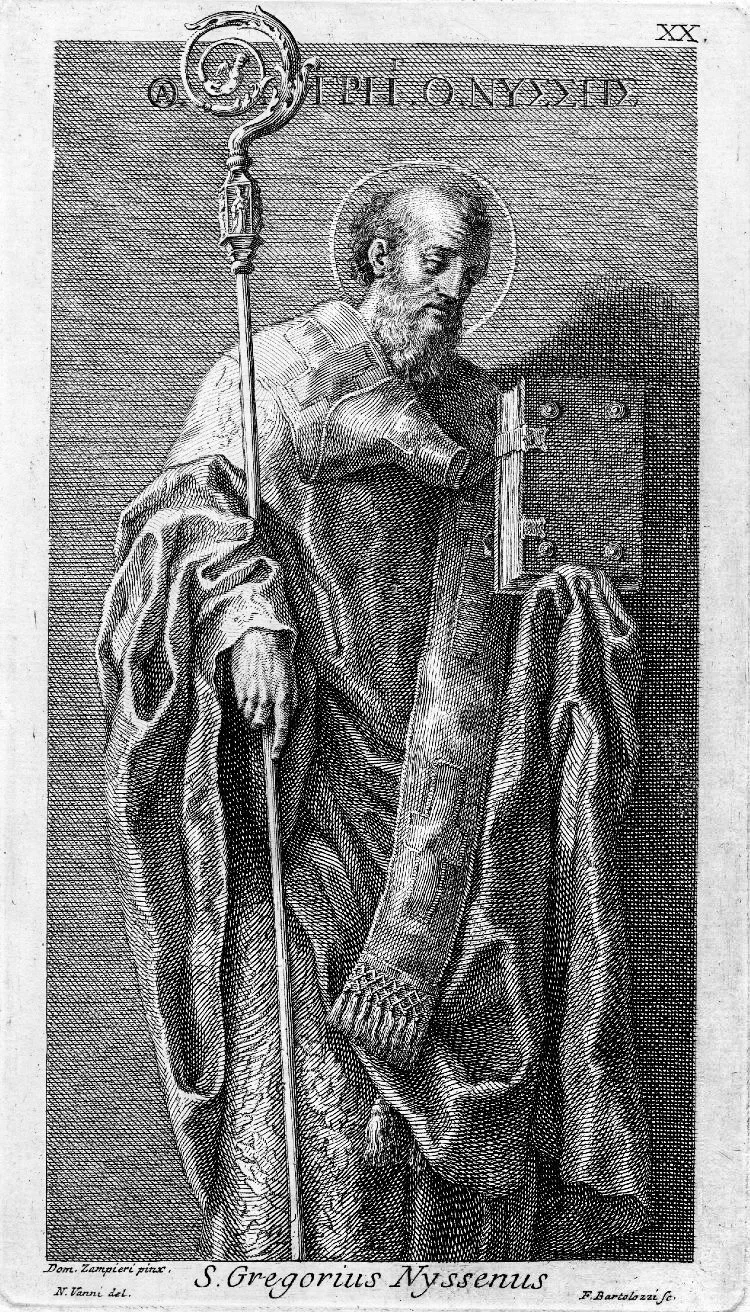
Today we’ll be taking a look at Gregory of Nyssa’s homily 4 on Ecclesiastes, in which he tackles a topic that is often a bit difficult for many Christians: slavery. Scripture describes many instances of slavery in the ancient world, and there are many passages, particularly with respect to the Mosaic Law, that aim towards regulating and managing slavery rather than calling for its direct abolition. Many opponents of the Christian faith often level the critique that the Bible, and the Christian faith, failed to tackle the issue of slavery and reinforced rather than abolished it.
Gregory of Nyssa was the first, or at the very least one of the first, known ancient writer(s) to outright reject slavery and he did so by making Christian arguments deeply steeped in Christian concepts. He notes that slavery violates the principle that man is made in the image of God and proclaims it “arrogance” to think someone can own another human being. Let’s take a look.
NOTE: This translation of the text is taken from earlychurchtexts.com and Rev. Andrew Maguire.
Ecclesiastes 2:7 “I got me slaves and slave-girls,and homebred slaves were born for me,and much property in cattle and sheep became mine.”
The theme of confession is still the focus of our text. The writer of Ecclesiastes sets out in careful order virtually everything in his own experience through which the futility of our activities in this life is known. But at this point he touches on what appears to be a more serious piece of evidence from his deeds through which he can be accused of the affliction of arrogant pride. What is there in what he has laid before us so far which leads to such a level of conceit? He has told us about a valuable house, an abundance of vines, elegant gardens and water features, nicely constructed swimming pools, extensive beautiful parkland. Yet, none of this can compare to his presumption that, as a human being he believes he can lord it over people who in essence are just like him. Because then he goes on to say: “I got me slaves and slave-girls, and homebred slaves were born for me”.
Do you detect the excessive arrogance? An utterance like this shows that he is exalting himself against God. We know from the words of the prophets that absolutely everything is subject to the supreme authority in the universe (Psalm 119/118.91). But this man counts as his own what truly belongs to God and gives to the likes of himself the kind of power which makes him think that he can be the master of men and women. When he sees himself as so different from those who are subject to him one can only conclude that pride has led him to go beyond what is appropriate for his nature.
“I got me slaves and slave-girls.” You are condemning to slavery human beings whose nature is free and characterized by free will. You are making laws that rival the law of God, overturning the law appropriate for humankind. Human beings were created specifically to have dominion over the earth; it was determined by their creator that they should exercise authority. Yet you place them under the yoke of slavery, as though you are opposing and fighting against the divine decree.
Have you forgotten the limits of your authority? Your rule is limited to the control of irrational creatures. In scripture we read: “let them rule over birds and fish and four-footed creatures”. (Gen 1.26) How then do you go beyond what is subject to you and exalt yourself against a nature which is free, counting people like you among four-footed or footless creatures. “You subjected everything to humankind” declares the scripture through prophecy and it goes on to list what is under human control: domestic animals, cattle and sheep. (Psalm 8/7.8) Surely human beings have not been born to you from domestic animals? Surely cattle have not given birth to human offspring? Irrational creatures alone are subject to humankind. “He makes grass grow for animals and green plants for people’s slaves”. (Psalm 104/103.14). But you have torn apart the nature of slavery and lordship and made the same thing at one and the same time enslaved to itself and lord of itself.
“I got me slaves and slave-girls.” Tell me what sort of price you paid. What did you find in creation with a value corresponding to the nature of your purchase? What price did you put on rationality? For how many obols did you value the image of God? For how many coins did you sell this nature formed by God? God said: “Let us make human beings in our own image and likeness” (Gen 1.26). When we are talking about one who is in the image of God, who has dominion over the whole earth and who has been granted by God authority over everything on the earth, tell me, who is the seller and who the buyer? Only God has this kind of power, or, one might almost say, not even God. For scripture says that the gifts of God are irrevocable (Romans 11.29). God would not make a slave of humankind. It was God who, through his own will, called us back to freedom when we were slaves of sin. If God does not enslave a free person, then who would consider their own authority higher than God’s?
How can people be sold who have dominion over the earth and everything on the earth? It is essential that the assets of people being sold are sold with them. How can we value the contents of the whole earth (Genesis 1.26)? If these are beyond any valuation then tell me, what is the value of the one who is over them? If you said “the world in its entirety”, even then you would not have found anything approximating to the value (Matthew 16.26; Mark 8.36). Someone knowing the true value of human nature said that not even the whole world is worth enough to be given in exchange for the human soul. So when a human being is for sale, it is nothing other than the lord of the earth being brought to the auction room. This means that creation as we know it is at the same time being put up for public sale. That is earth, sea and islands and all that is in them. How then is the purchaser going to settle the payment? What will the vendor accept considering the greatness of the property involved in the transaction?
Did the little notebook, the written agreement and the calculation in obols trick you into thinking that you could be master of the image of God? What utter folly! If the contract was lost, if the writing was eaten by moths, if a drop of water fell on it and washed it away, where is there any proof that you have a slave? Where is there anything that supports you in being a master? You have somebody who is named as your subordinate, but beyond the mere name I see nothing. What did such power add to your real nature? It did not give you extra years or any genuine superiority. Your lineage is still human, your life is similar, the sufferings of the soul and the body prevail upon you both in the same way, with you as master and another in subjugation you are still both affected by agony and delight, gladness and distress, sorrow and joy, anger and fear, disease and death. Surely there is no distinction in such things between slave and master? Do they not draw in the same air when they breathe? Do they not see the sun in a similar way? Do they not both sustain their life by taking in nourishment? Is not the make-up of their bodily organs the same? Do they not both return to the same dust after death? Do they not both face one and the same judgment? Is not the prospect of heaven and hell the same for them both?
So when you are equivalent in every way, tell me in what particular way you have more so that you think you can become master of another human being even though you are a human being yourself. “I got me”, you say, “slaves and slave-girls,” as though they were a herd of goats or swine. After saying “I got me slaves and slave-girls,” he added the good cheer that comes through flocks and herds. For he says “And much property in cattle and sheep became mine”, as though animals and slaves were subject to his authority to an equal degree.
CONCLUSION
As I expressed in the introduction, the process of these insights eventually culminating in the full-blown legal abolition of slavery was frustratingly gradual. Gregory of Nyssa’s words were not heeded in his own time; slavery would continue for approximately 1500 years beyond his death. Many Christians deployed Scripture and tradition in its defence. However, Gregory of Nyssa’s writing here is remarkable and prophetic; during a time when slavery was seen as just a fact of life, when no one blinked twice at its continuation, Gregory stands alone and says to his congregation, “thus says the Lord,” sounding millennia ahead of his time in calling for its complete and total abolition. Glory to Christ from whom all blessings and true utterances flow, that He raises up godly men like Gregory to stand up for justice and truth throughout the history of His Church.